

The Supreme Court justices who stopped the impeachment trial of Vice-president Sara Duterte-Carpio this August may end up getting impeached themselves.
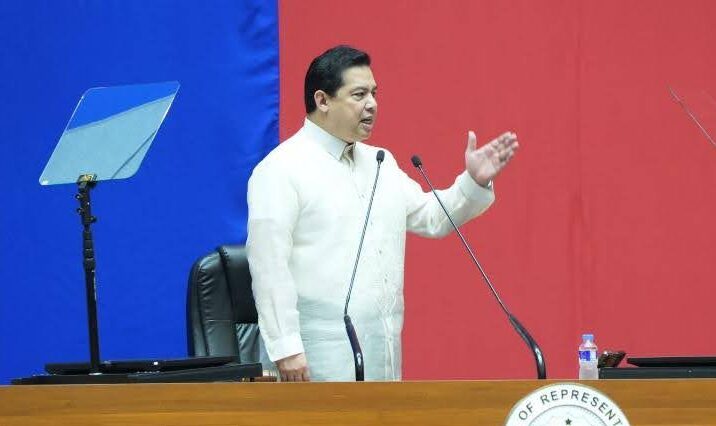
This ironic twist surfaced when Speaker Martin Romualdez reminded the justices that they, too, can be impeached by the House of Representatives.
“The Supreme Court is a co-equal branch of government. Its wisdom is deep. Its authority is real. But its Members – like the President and the Vice-president – are also impeachable officers,” said Speaker Romualdez in a statement released August 4, the day the House filed a Motion for Reconsideration (MR) at the High Court.
The MR seeks the reversal of the High Court’s ruling on July 25 that declared the Vice- president’s impeachment case as unconstitutional.
The justices cited the one-year bar rule under the Constitution that prohibits the initiation of more than one impeachment proceeding against the same official within a period of one year.
While the ruling halted the Senate trial, the Court clarified that it was not absolving the Vice-president of the charges. It said a new complaint may be filed after February 6, 2026, or exactly a year after the Articles of Impeachment against Duterte were endorsed by more than the required one-third membership of the House.
Rep. Leila de Lima, a former senator and Justice secretary, issued a similar warning to the Supreme Court whose justices voted 13-0-2 to junk Duterte’s impeachment case.
“Ayaw ko po sana magbanggit ngayon ng, you know, that we can initiate, or any interested party can initiate impeachment process against these justices themselves, ayoko pa sana, but that probability ay nandiyan,” De Lima said during a television talk show.
(As much as possible, I do not want to mention, you know, we can initiate, or any interested party can initiate impeachment process against these justices themselves, I do not want it, but that probability is there.)
“That actually is a constitutional crisis because one co-equal body is going against another one head-on. (The whole body will be impeached so we will no longer have a) Supreme Court in the meantime. So what happens to the workings of the administration of justice? So as much as possible, the ball is actually with the Supreme Court now as well as the Senate,” added De Lima.
For Speaker Romualdez, standing by the mandate of the House is not a threat to democracy “but a defense of it.”
“To dissent is not to defy. To demand accountability is not to destabilize. To insist on constitutional integrity is not to weaken democracy, it is to strengthen it,” stressed Romualdez.
The Speaker, a lawyer by training, said the MR filed at the Supreme Court is not a challenge to the authority of the latter.
“We seek only to preserve the rightful role of the House – the voice of the people – in the process of accountability,” he said.
Speaker Romualdez underscored that the House acted within the 10-session-day limit provided in the Constitution when it transmitted the fourth impeachment complaint on February 5, 2025.
“On February 5, 2025, the House transmitted the fourth impeachment complaint – filed and signed by 215 Members – to the Senate. Only after this transmittal did we archive the three earlier complaints. That sequence matters. It proves there was only one valid initiation, not four,” he explained.
“Even the Court’s own precedent – Francisco v. House – supports this: Only one impeachment can be initiated, and that initiation begins with a one-third endorsement or a referral. That is exactly what the House did,” he added.

