

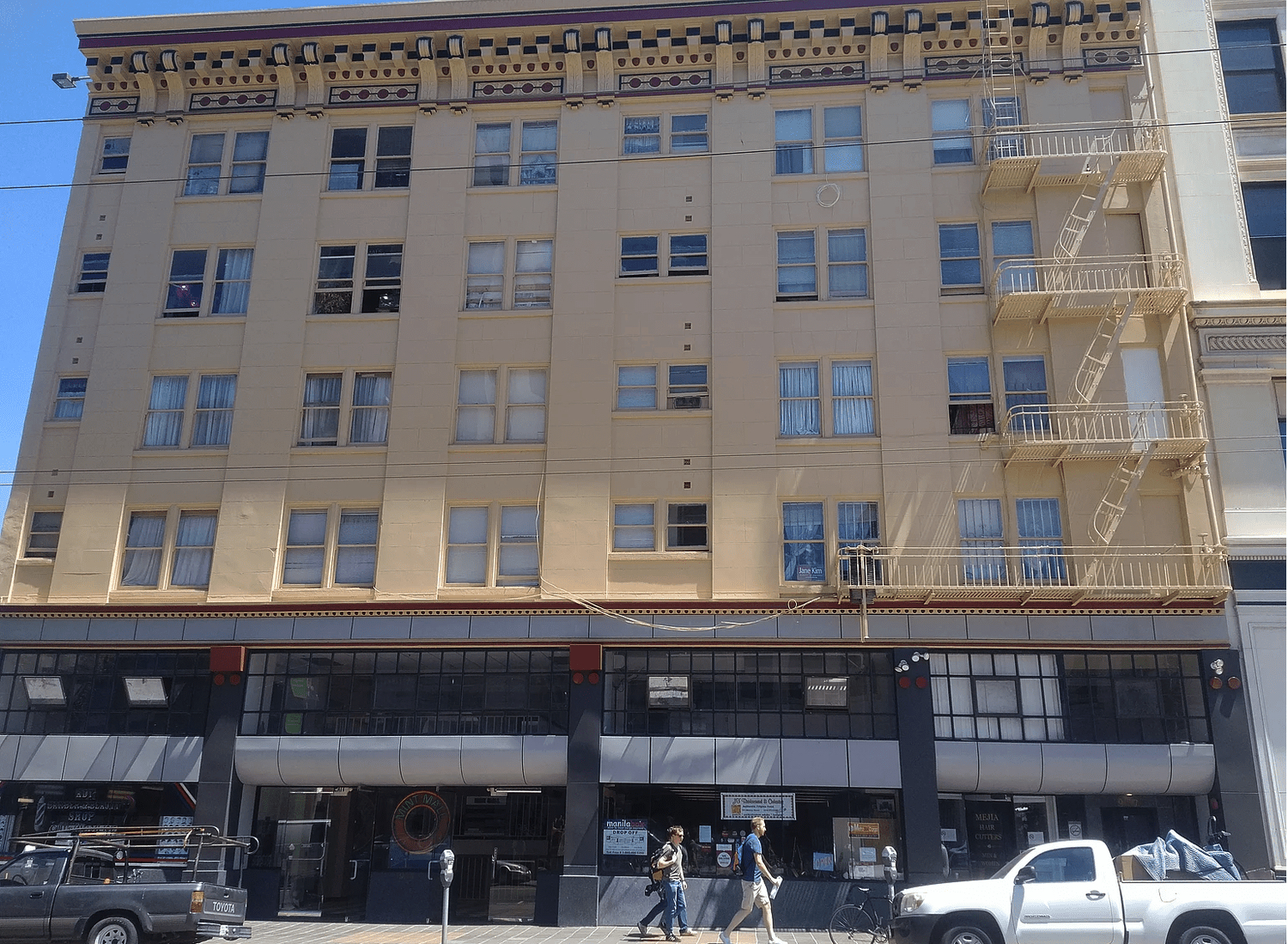
SAN FRANCISCO – The Historic Preservation Commission (HPC) unanimously approved the historic landmark designation of the Mint Mall and Hall on September 3, 2025. It is an initial victory for the Filipino community and San Francisco history in a long process that involves a series of public hearings held both by the HPC and the Board of Supervisors. Final approval of a Landmark or Landmark District requires a majority vote by the Board of Supervisors and signature by the mayor.
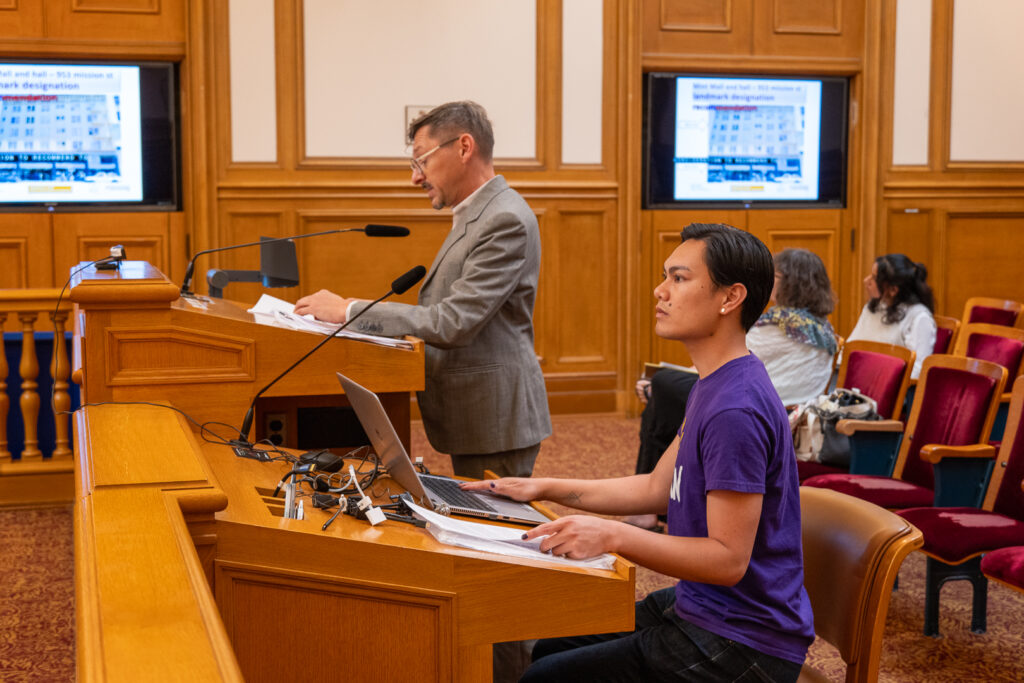
Led by the South of Market Community Action Network (SOMCAN) and SOMA Pilipinas along with Moses Corrette, senior planner of the SF Planning Department, the Mint Mall and Hall Historic Landmarking Project started in March 2024. The process involved conducting interviews with longtime residents, business owners, and community members who have a deep connection with the Mint Mall and Hall. It has been described as a “nerve center for the community,” a “gateway building,” and a “starting point” for Filipino immigrants to the San Francisco Bay Area. Many Filipino families first establish residence in San Francisco in the Mint Hall due to its affordability, and they often hold onto their units to allow other relatives to also start taking root in the city.
As part of the process, on July 8, 2025, a community town hall meeting was held by SOMCAN, SOMA Pilipinas, Moses Corrette, and the office of District 6 Supervisor Matt Dorsey with the residents, business owners, and community members at the Mint Mall. The project was introduced along with the significance of the Mint Mall and Hall as a historic landmark. The process for landmarking was laid out and questions and concerns from those in attendance were addressed.
The historic landmarking of the Mint Mall and Hall comes at the heels of the constant threat of gentrification and displacement of communities in San Francisco. In 2000, during the dotcom boom that caused widespread gentrification and displacement in the South of Market, Filipino tenants in the Mint Mall, Teatro ng Tanan and the print shop Super Reproductions, were being served eviction notices, and it was unclear if leases would be renewed for Arkipelago Books, New Filipinas (now JT) restaurant, and FAMAS (Filipino American Music and Arts Society). The owners of the Mint Mall wanted to convert retail spaces in the building to office spaces for dotcom startups. Led by Marie Romero of Arkipelago Books, and Bill Sorro, Jeanne Batallones, and Roy Recio of SOMCAN, the Mint Mall Organizing Committee (MMOC) challenged the owners on the grounds of zoning code violations, illegally converting retail space into office space. The MMOC was successful in negotiating long-term leases for the Filipino businesses.
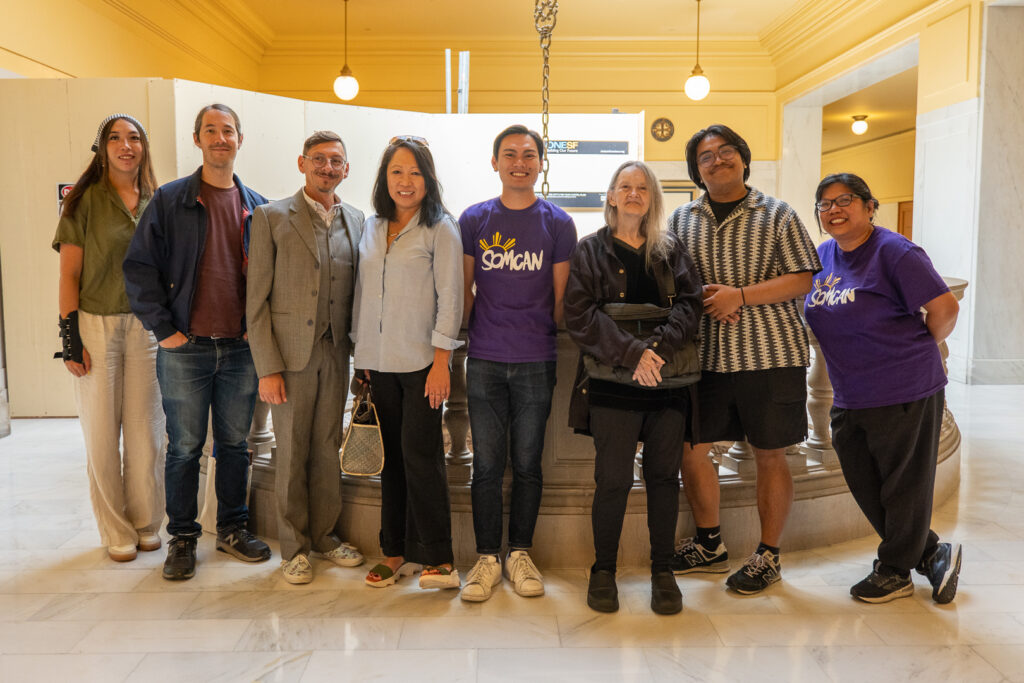
“The Mint Mall is a touchstone for the Filipino community, not just in the South of Market but the whole Bay Area,” said Zachary Frial, Social Development and Policy Coordinator with SOMCAN. “Since the 1990s, the Mint Mall has served as a “nerve center” for Filipino arts, culture, and commerce. The fight to save Filipino businesses and non-profits in the Mint Mall in 2000 was one of the pivotal moments that ignited a new wave of Filipino activism in San Francisco.”
Built in 1916 as a residential hotel, the Mint Mall and Hall transferred to full Filipino ownership in the 1980s. Since then, a large population of Filipino residents has inhabited the apartments in the upper residential floors of the building (known as the Mint Hall) and supported a host of Filipino small businesses and non-profits below in the Mint Mall.
As one of the centers of gravity for the Filipino community in SOMA, the Mint Mall and Hall has been the site of significant cultural events, including the annual Pasko sa SOMA (Christmas in SOMA) and first parol-making workshops for the Parol Lantern Festival. The Mint Mall and Hall has been an invaluable neighborhood asset in District 6 for over 44 years, especially to the Filipino community in San Francisco.
Landmarks and Historic Districts are irreplaceable assets that reflect the historical character of the City and its neighborhoods to showcase the best of the past and recent generations. The goal of Landmark designation is to protect, preserve, and enhance these significant cultural resources, encourage their continued use, and manage change for future generations.
“The designation for the Mint Mall and Hall continues the Historic Preservation Commission and Planning Department’s goals to give formal recognition as official city landmarks to under-represented communities. I am proud to have been able to collaborate with the SOMA Pilipinas – Filipino Cultural Heritage District to document this history which had never been fully written before. I’m also happy that this is the first San Francisco landmark with a history presented in two languages,” said Moses Corrette.
To qualify for landmark designation by the HPC, buildings, districts, places, structures, or objects must hold historical significance at the city, state, or national level. This could include being the site of a significant historic event, association with a notable culture or individual, embodying exemplary architecture or the work of an architect or designer of merit, or representing a significant theme of San Francisco’s history.
Located in the SOMA Pilipinas Filipino Cultural Heritage District, the Mint Mall and Hall is recognized as a key community asset. The SOMA Pilipinas Cultural History, Housing, and Economic Sustainability Strategy (CHHESS) Report was adopted by the city in 2022. One of the strategies identified in the report is to landmark buildings in SOMA that have historical and cultural significance to the Filipino community. To build on this and expand efforts to implement the CHHESS report, SOMA Pilipinas and SOMCAN worked with the Planning Department to create the CHHESS Affordable Housing Implementation Plan that identified the Mint Mall and Hall as a building to be explored for historic landmarking.
“The Mint Mall definitely is a symbol of our efforts of advocacy and organizing and resilience to stopping being displaced and gentrified out of San Francisco,” said Angelica Cabande, executive director of SOMCAN. “It’s where a lot of things started in our efforts to coordinate and to work together collectively. That spirit of bayanihan (communal unity and cooperation) is still there, all of us connecting and organizing together.”
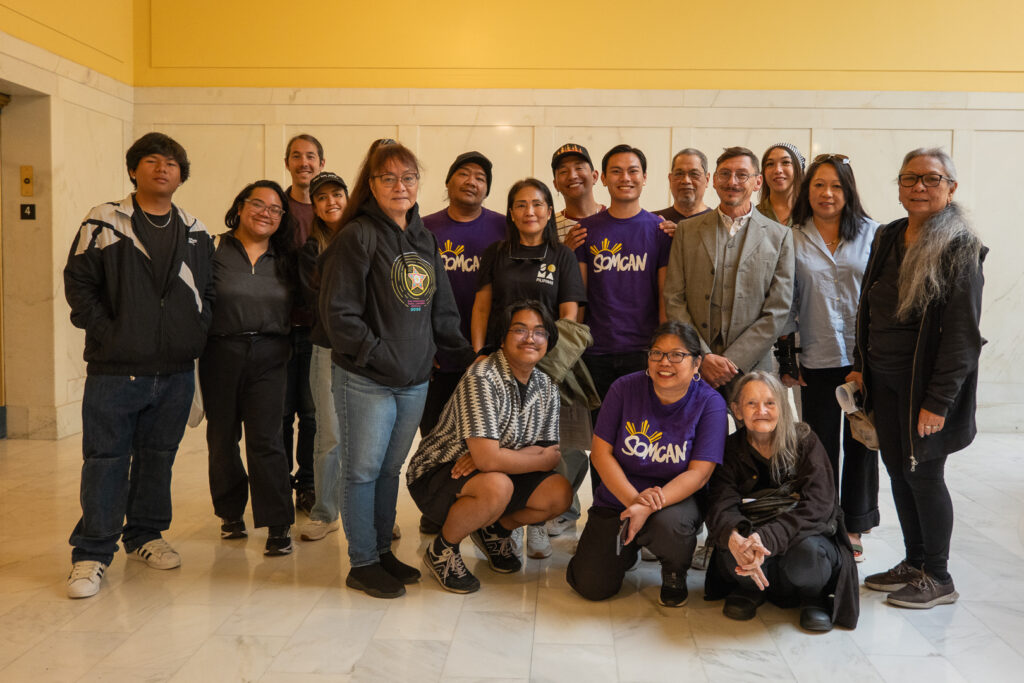
About SOMCAN:
Established in 2000, the South of Market Community Action Network (SOMCAN) is a multi-issue and multi-strategy organization that nurtures the lives of youth, families, individuals, and workers. We work on a wide range of issues—from tenant rights to
community planning to Filipino language access to workers rights—and provide culturally competent direct services ranging from tenant counseling to family support to youth empowerment to employment.
SOMCAN believes in uplifting the voices of immigrant, people-of-color, and low-income communities, so they will be heard in local policy-making decisions and civic offices are accountable to their needs.

